Case 19 | Archetypes of Capital Architecture Gravity Systems and Node Economies in Modern Cities

Introduction:
Capital Is Not Money — It Is Structure
When people speak of capital, they often refer to funding, investment size, or market valuation.
Yet the true force that shapes societies is not capital itself, but the architecture behind it.
Structure determines how attention flows, how value is distributed, and who ultimately holds the power of definition.
In cities like Melbourne, capital architecture is not abstract theory. It is visible in large commercial complexes, urban development zones, and historic retail streets. From mega-scale shopping centres in the eastern suburbs to independent storefronts along heritage streets, two distinct archetypes coexist.
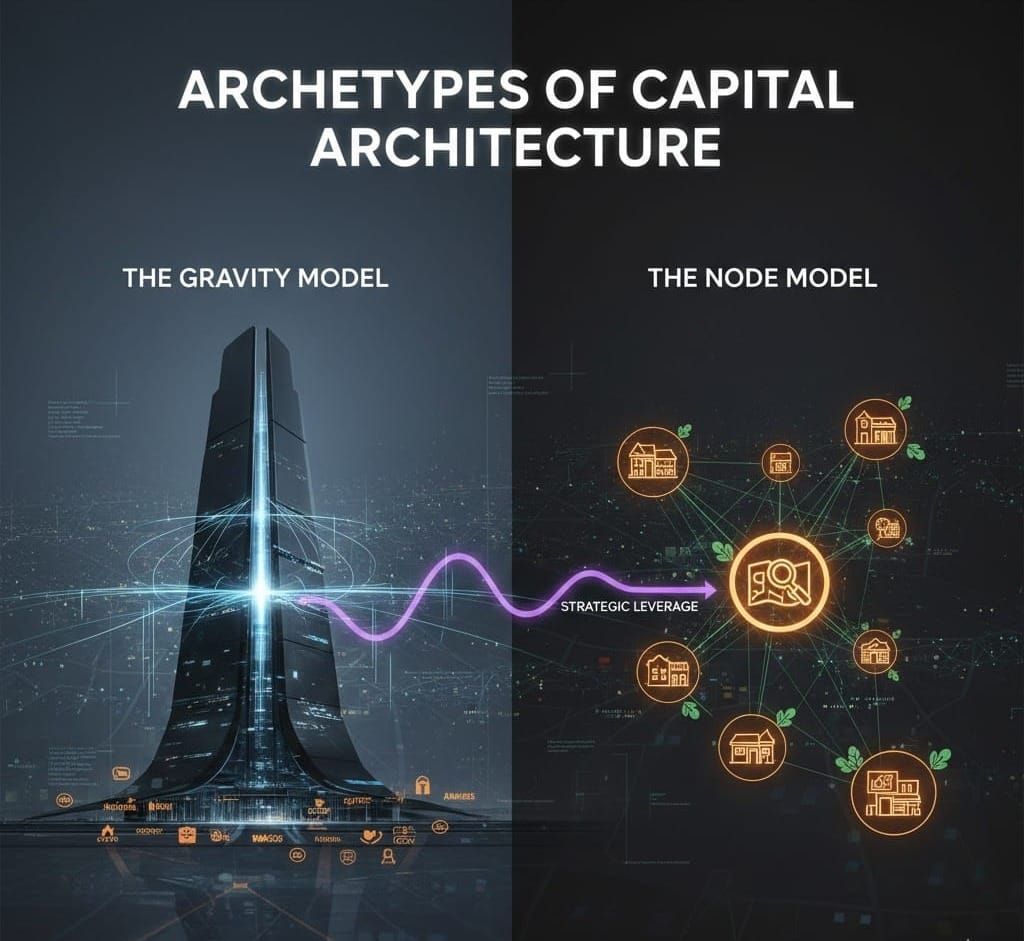
I. The Gravity Model of Capital
The first archetype is the gravity model.
This structure concentrates traffic, branding power, and resources into a single dominant hub.
In the digital world, it may resemble a large distribution or search platform.
In the physical world, it appears as large-scale commercial centres.
Key characteristics:
- Centralized traffic concentration
- Strong bargaining power
- Structural cost imposed on participants
The advantage of this model lies in scale and efficiency.
Its cost lies in dependency and ongoing rental relationships.
II. The Node Model of Capital
The second archetype is the node model.
This structure is decentralized and distributed across independent units.
In Melbourne’s street economy, this model is reflected in:
- Independent restaurants on heritage streets
- Local florists and service studios
- Community-based professional businesses
Characteristics include:
- Operational sovereignty retained by the owner
- Transparent cost structures
- Value flowing directly into product and service quality
While smaller in scale, node systems often demonstrate greater resilience.
III. Strategic Leverage: Light Asset Defense
When gravity systems dominate infrastructure, nodes need not confront them directly.
A more sustainable strategy is:
Use the infrastructure without becoming the infrastructure.
In the digital age, local businesses may use search engines, mapping systems, and data tools as traffic gateways — yet anchor their value in real streets and real communities.
This approach represents a form of light asset defense:
- Avoid building heavy infrastructure
- Avoid absorbing systemic capital burn
- Leverage visibility while preserving autonomy
IV. The Future of Capital: Balancing Weight and Lightness
Capital architecture is not a moral issue. It is a structural choice.
Gravity systems accelerate scale and reach.
Node systems preserve authenticity and definition rights.
The future lies not in rejecting centralization entirely, but in understanding how to balance weight and lightness.
In culturally distinct cities such as Melbourne, localized nodes often outlast oversized structures.
"Theory into Practice: This specific archetype of capital preservation is currently being deployed atBreak40, where the balance between quality and economic architecture is managed daily through the charcoal tradition."
Case 19 | 資本的結構原型
前言:資本並非金錢,而是結構
當人們談論資本,往往想到的是資金、投資與市場規模。
然而,真正影響社會運作的,並不是資金本身,而是資本背後的「架構」。
架構決定了流量如何被吸納、價值如何被分配、以及誰擁有最終的定義權。
在像 Melbourne 這樣的城市裡,資本架構並非抽象概念,而是體現在大型購物中心、城市更新計畫與街區商業生態之中。從東區的巨型商業綜合體,到歷史街道上的獨立商戶,兩種模式代表了不同的資本原型。
一、黑洞型資本(Gravity Model)
第一種原型,是「重力型架構」。
這種結構的特徵是高度集中。
流量、品牌、數據與資源被吸納至單一平台或空間。
在數位世界,它可能是一個大型搜尋或分發平台。
在實體世界,它可能是一座超大型商業中心。
其核心特徵:
- 高度流量集中
- 強議價能力
- 對進入者徵收「結構性成本」
這種模式的優勢是規模與效率。
其代價則是依附與租賃關係。
二、節點型資本(Node Model)
第二種原型,是「節點型架構」。
這種模式分散、去中心化。
它不依賴單一黑洞,而是由多個獨立節點組成。
在 Melbourne 的街道經濟中,這種模式體現在:
- 歷史街區的獨立餐廳
- 社區花店與專業工作室
- 本地服務型商業
節點型架構的特點:
- 定義權掌握在經營者手中
- 成本結構更透明
- 價值更直接流向產品與服務本身
它規模較小,但韌性更強。
三、輕資產防禦(Strategic Leverage)
當重力型架構壟斷基建時,節點並不需要正面對抗。
更成熟的策略是:
利用基建,而非成為基建。
在數位時代,本地商戶可以使用搜尋引擎、地圖與數據工具作為流量入口,但價值最終回歸具體的街道與服務。
這是一種「輕資產防禦」:
- 不建黑洞
- 不承擔沉重基建成本
- 借用流量,保留主權
這種策略,在城市商業結構中尤為重要。
四、資本的未來:重與輕的平衡
資本架構並非善惡問題,而是結構選擇。
黑洞型資本推動規模與效率。
節點型資本守護真實與定義權。
未來的關鍵,不在於全面去中心化,
而在於如何在重與輕之間取得平衡。
在 Melbourne 這樣具有強烈地緣文化的城市,節點的價值,往往比規模更持久。
本案所探討的「資本架構原型」並非單純的理論推演,目前已全面應用於墨爾本東區的實體餐飲戰場 ——Break40。