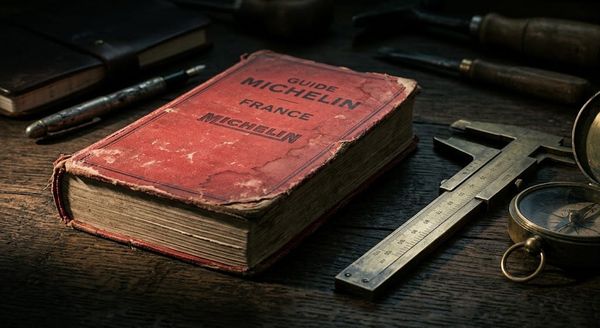
Case 66 | When Answers Become Consensus


Some things may seem to have very little to do with each other.
On one side, more and more people are handing investment decisions over to rules, indexes, and passive mechanisms.
On the other, some people inherit substantial wealth without necessarily inheriting the judgement that was required to build it.
One is about how assets are allocated.
The other is about how a person makes choices.
But if we step back far enough, perhaps both begin in the same place:
When choosing itself becomes too expensive, people begin looking for answers that can reduce the space of choices for them.
01|When Choice Becomes Expensive
The more information we have, the more options we often have.
Different products.
Different ways to invest.
Different careers.
Different ways to live.
At first glance, more information should mean more freedom.
But more options also mean more comparison, more analysis, more waiting, and a greater cost of being wrong.
Eventually, the expensive part may no longer be getting the information.
It becomes:
Which one should I choose?
So we start looking for things that can narrow the space of choices.
Rules.
Models.
Recommendations.
Experience.
Experts.
Even an answer that has already been proven to work.
This does not necessarily mean people have become lazy.
In many situations, it is simply a rational way of controlling cost.
If someone has already walked this path, why start from zero?
But that raises another question:
What does an answer save us from—and what does it cause us to stop seeing?
02|An Answer Can Compress the Past, but It Cannot Simply Be Copied Into the Present
An answer is often a compressed form of experience.
Someone, in a particular environment, saw certain conditions, made a particular choice, and eventually reached a particular result.
Later, we may keep only the final sentence:
“This works.”
And so the answer can be passed on.
It can even be copied on a large scale.
But what gets copied is usually the result.
The environment that produced that result may no longer exist.
So the question that needs to happen again is not:
“Was the old answer right?”
It is:
“Is the A we are looking at today still the same A?”
If the environment has changed, an answer that was once completely reasonable does not automatically become the answer for the next decision.
An answer can be inherited.
Judgement must happen again.
03|When an Answer Becomes Widely Adopted
If only one person adopts an answer, it remains an individual choice.
But as more and more people adopt the same answer, something begins to change.
It can become a rule.
A habit.
A market structure.
Even a consensus.
But there is an important point that is easy to miss:
Consensus is not necessarily wrong.
Perhaps one of the simplest examples in everyday life is money.
People collectively accept certain pieces of paper, numbers, or claims recorded in accounts as something that can be exchanged for goods and services.
That consensus is not simply a collective belief in something false.
It is part of the infrastructure through which reality operates.
So the more interesting question is not:
“Is consensus dangerous?”
It is:
“When an answer is adopted on a large scale, does it begin to participate in changing the reality in which it operates?”
04|Consensus Does Not Only Describe Reality
Suppose many people believe in a particular way of making choices.
They act according to it.
Resources begin to concentrate in certain places.
Businesses respond.
Markets adjust.
Other people's choices are influenced as well.
At that point, an answer that originally only described what had worked in the past may begin to participate in creating the conditions of the next environment.
This does not require anyone to be controlling the process.
There does not need to be a hidden designer.
If enough people take similar actions at the same time, those actions alone can create new environmental conditions.
A loop begins:
Answer → Adoption → Consensus → Collective Action → Environmental Change → New Reality
And the new reality becomes an input into the next decision.
So:
Consensus is not the danger.
But when consensus begins to participate in shaping reality, it needs to enter judgement again.
05|Inheritance Does Not Necessarily Mean Replication
Perhaps the history of a brand offers another way to look at this.
Hermès began as a workshop making harnesses.
Then the environment changed.
Transportation changed.
People's ways of living changed.
But it did not treat the harness itself as the only thing that needed to be preserved.
What continued was craftsmanship, materials, technical ability, and a particular expectation of quality and durability.
The form could be recombined as the environment changed.
From harnesses, to leather goods and travel products, and later into a much broader range of products.
But there is another layer to the survival of a brand.
The name Hermès carries meaning because, over time, many people repeatedly accepted a shared expectation:
this name represents a certain level of quality.
That is also a form of consensus.
It was not established once.
It did not appear out of nowhere.
It had to be repeatedly confirmed through use, transactions, and experience.
So perhaps what is inherited is not the consensus itself.
It may be:
the judgement required to keep that consensus alive.
Of course, we only see the one that survived.
There were many workshops making harnesses in the past that we no longer see today.
So this is not saying:
“If you keep re-evaluating, you will survive.”
It is simply saying:
What survives across time does not necessarily survive by remaining unchanged.
06|Are We Inheriting the Answer, or the Ability to Form One?
There may be a very subtle difference here.
If the previous generation leaves us with:
“This is how we did it before, so this is how you should do it.”
Then what has been inherited is the answer.
But if what they leave us with is:
“These are the capabilities we have accumulated. What is the environment now? You need to judge that for yourself.”
Then what has been inherited is no longer just the answer.
It is the ability to form one.
The two may look similar.
In practice, they are very different.
Copying an answer brings the past into the present.
Inheriting capability allows the past to participate in present judgement.
07|So Perhaps the Question Is Not Whether We Should Trust Answers
We cannot start from zero every time.
Human civilisation accumulates precisely because answers can be passed on.
Knowledge can be inherited.
Experience can be inherited.
Technology can be inherited.
Wealth can be inherited.
If every generation had to reinvent the wheel, humanity could never accumulate anything.
Perhaps the question we need to preserve is something else:
When an answer is inherited, does the entrance to judgement remain open?
Because an answer can tell us:
“This is what happened before.”
But judgement has to ask again:
“Is what is happening now actually the same thing?”
08|So Where Is Our Own Anchor?
This brings us back to a question Reality Check encountered much earlier.
As more and more forms of credit, choice, and judgement can be handed over to external systems,
what can still bring us back into contact with reality?
Not another, better answer.
But an Anchor.
Something that allows the result to return to a position grounded in reality.
Real transactions.
Long-term relationships.
Repeated outcomes.
Actual experience.
Things that cannot be completely replaced by a number, a ranking, a model, or a sentence.
Case 33 approached this question from another direction:
The Other Side of Credit: Where Is Your Anchor?
Case 64 then pushed the question one step further:
Answers Can Be Inherited, but Judgement Must Happen Again.
Now the question moves one step further.
If an answer is not inherited by just one person,
but adopted collectively by a group, a market, or an entire generation,
it may stop being merely an answer.
It may become consensus.
09|When Answers Become Consensus
Consensus can create stability.
It can reduce transaction costs.
It can allow strangers to cooperate.
It can allow a system to operate for decades.
But as the scale of adoption grows, consensus can also become part of reality itself.
And reality continues to move.
So perhaps what we really need to preserve is not loyalty to a particular answer.
It is:
the ability to judge again after the answer has been inherited.
Because we can never live only in the moment when an answer was formed.
We live in what comes after it.
And what comes after it is already another environment.
Answers can be inherited.
Judgement must happen again.
Continue the thread
Case 33 — The Other Side of Credit: Where Is Your Anchor?
When external systems become increasingly capable of measuring, classifying, and assigning credit, what can still remain as our own Anchor?
Case 64 — Answers Can Be Inherited, but Judgement Must Happen Again
Case 66 | 當答案變成共識
有些事情,看起來彼此沒有太大關係。
一邊,是越來越多人把投資選擇交給規則、指數與被動機制。
另一邊,是有人繼承了大量財富,卻未必同時繼承了形成這些財富所需要的判斷。
一個是資產如何被分配。
一個是人生如何做選擇。
但如果把兩件事放得更遠一點看,它們可能都從同一個地方開始:
當選擇本身變得太昂貴,人會開始尋找可以替自己縮小選擇空間的答案。
01|當選擇開始變得昂貴
資訊越多,選項往往也越多。
不同的產品、不同的投資方式、不同的職業、不同的生活選擇。
表面上看,更多資訊應該帶來更多自由。
但選項增加,也代表比較、分析、等待,以及承擔錯誤的成本增加。
最後真正昂貴的,可能不再是取得資訊。
而是:
我究竟應該選哪一個?
於是,人開始尋找能夠縮小選擇空間的東西。
規則。
模型。
推薦。
經驗。
專家。
甚至是一個已經被證明過的答案。
這不一定代表人變得懶惰。
在很多情況下,這反而是一種合理的成本控制。
如果別人已經走過一次,我為什麼還要從零開始?
答案替我們節省了什麼,又替我們省略了什麼?
02|答案可以壓縮過去,卻不能直接複製現在
一個答案,往往是某段經驗的壓縮。
某個人在某個環境裡,看見了某些條件,做出了某個選擇,最後得到一個結果。
後來我們只留下了最後那一句:
「這樣做有效。」
於是答案可以被傳遞。
甚至可以被大量複製。
但被複製的,通常只是結果。
形成這個結果的環境,卻未必還存在。
所以真正需要重新發生的問題,不是:
「以前的答案對不對?」
而是:
「現在的 A,還是不是以前那個 A?」
如果環境已經改變,同一個答案即使曾經完全合理,也不能因此自動成為下一次判斷的答案。
答案可以被繼承,判斷卻必須重新發生。
03|當答案開始被大量採用
如果只有一個人採用一個答案,它仍然只是個人的選擇。
但當越來越多人採用同一個答案,事情就開始發生變化。
它可能變成一種規則。
一種習慣。
一種市場結構。
甚至是一種共識。
但這裡有一個容易被忽略的地方:
共識本身未必是錯的。
我們日常生活裡最基本的例子,也許就是貨幣。
人們共同接受某種紙張、數字或帳戶上的權利,可以交換商品與服務。
這種共識不是單純相信了一個假的東西。
它本身就是現實運作所需要的基礎設施。
所以真正值得問的,不是:
「共識是不是危險?」
而是:
「當一個答案被大規模採用之後,它是否開始參與改變自己所處的現實?」
04|共識不只是描述現實
假設很多人相信某一種選擇方式。
他們依照這個方式行動。
資源於是開始往某些地方集中。
企業開始因應。
市場開始調整。
其他人的選擇也開始受到影響。
這時候,最初只是「描述過去有效」的答案,可能已經開始參與下一個環境的形成。
這並不需要有人操控。
也不需要一個幕後的設計者。
只要足夠多人同時採取相似的行動,就可能產生新的環境條件。
於是出現了一個循環:
答案 → 採用 → 共識 → 集體行動 → 環境改變 → 新的現實
而新的現實,又會反過來成為下一次選擇的輸入。
所以:
共識不是危險。
但當共識開始參與塑造現實,它就需要再次進入判斷。
05|繼承,不一定等於複製
也許一個品牌的歷史,可以提供另一種觀察方式。
Hermès 最初是一間製作馬具的工坊。
後來環境改變,交通方式改變,人的生活方式也改變。
但它沒有把「馬具」本身當成唯一需要保存的東西。
真正延續下來的,是工藝、材料、製作能力,以及對品質與長久使用的要求。
形式則可以隨著環境重新組合。
從馬具,到皮革製品與旅行用品,再到後來更廣泛的產品。
但一個品牌能延續,還有另一層。
Hermès 這個名字之所以具有意義,也建立在很多人長期、重複地接受某種共同期待:
這個名字,代表某種品質。
這也是一種共識。
它不是一次建立的,也不是憑空出現的。
它需要在一次又一次的使用、交易與經驗裡被重新確認。
所以被繼承下來的,不一定是共識本身。
而可能是:
持續維護這個共識的判斷。
當然,我們現在看到的,只是延續下來的那一家。
歷史上曾經有很多製作馬具的工坊,而我們今天不會一一看見它們。
所以這不是在說:
「重新判斷,就一定能活下來。」
只是說:
能夠延續的東西,未必是完全沒有改變的東西。
06|繼承的是答案,還是形成答案的能力?
這裡可能存在一個很細的差別。
如果上一代留下的是:
「以前這樣做,所以你也這樣做。」
那麼被繼承的是答案。
但如果留下的是:
「這是我們過去累積下來的能力;現在的環境怎麼樣,你需要自己重新判斷。」
那麼被繼承的,就不再只是答案。
而是形成答案的能力。
這兩者看起來很接近。
實際上卻完全不同。
複製答案,是把過去帶到現在。
繼承能力,則是讓過去參與現在的判斷。
07|所以,問題可能不是「要不要相信答案」
我們不可能每一次都從零開始。
人類之所以能夠累積文明,本來就是因為答案可以被傳遞。
知識可以繼承。
經驗可以繼承。
技術可以繼承。
財富也可以繼承。
如果每一代都必須重新發明輪子,人類根本無法累積。
真正需要被保留的問題可能是另一個:
當答案被繼承之後,判斷的入口還在不在?
因為答案可以告訴我們:
過去發生了什麼。
但判斷需要重新問:
現在發生的是不是同一件事?
08|那麼,我們自己的 Anchor 在哪裡?
這又回到了 Reality Check 很早以前碰過的一個問題。
當越來越多的信用、選擇與判斷,可以交給外部系統處理時,
什麼東西仍然能讓我們重新接觸現實?
不是另一個更好的答案。
而是一個 Anchor。
一個可以讓結果重新回到現實的位置。
真實交易。
長期關係。
重複發生的結果。
實際經驗。
那些沒有辦法只靠一個數字、一個排名、一個模型或一句話,就完全取代的東西。
Case 33 曾經從另一個方向問過這個問題:
The Other Side of Credit: Where Is Your Anchor?
→ Case 33 — The Other Side of Credit: Where Is Your Anchor?
而 Case 64 則把問題再往前推了一步:
答案可以被繼承,判斷卻必須重新發生。
→ Case 64 — 答案可以被繼承,判斷卻必須重新發生
現在,問題又多走了一步。
如果一個答案不只被一個人繼承,
而是被一群人、一個市場、一個世代共同採用,
它就可能從「答案」變成「共識」。
09|When Answers Become Consensus
共識可以創造穩定。
它可以降低交易成本。
可以讓陌生人彼此合作。
可以讓一個系統運作數十年。
但共識也會隨著採用規模,開始成為現實的一部分。
而現實本身又會繼續流動。
所以,也許真正需要保留的,不是對某個答案的忠誠。
而是:
在答案被繼承之後,仍然保留重新判斷的能力。
因為我們永遠不可能只活在答案形成的那一刻。
我們活在它之後。
而那裡,已經是另一個環境。
答案可以被繼承。
判斷,卻必須重新發生。
Continue the thread
Case 33 — The Other Side of Credit: Where Is Your Anchor?
當外部系統越來越能替我們衡量、分類與分配信用時,什麼仍然可以成為自己的 Anchor?
Case 64 — 答案可以被繼承,判斷卻必須重新發生
經驗可以節省成本,但被繼承的答案不能取代對當下環境的重新接觸。