Case 44 | Australian Survival Economics | The Hidden Burden of Living Costs — How Government Overspending Ends Up on Your Bill

One-sentence summary:
You’re not paying more tax because you’re earning more — you’re paying more because the government is spending too much.
I. Surface Phenomenon: Bills Are Rising, But Your Income Isn’t
Every tax season you feel like you’ve been skinned again, but your payslip barely moved.
Supermarket bills, electricity, and rent keep climbing — these aren’t one-off expenses, they’re steadily draining cash from your pocket every month.
The real problem isn’t that you’re earning too little. It’s that the government is spending way too much.
II. First Layer Cause: Government Overspending and Waste
In 2026, Victoria’s financial situation reached a critical turning point:
- Total debt has exceeded $160 billion and is projected to reach $187.8 billion by 2028.
- Interest payments in the 2025–26 financial year will hit $4.47 billion — that’s over $12 million per day.
- For every dollar you pay in tax, 12 cents goes straight to servicing interest.
The problem is that the government’s habit of overspending hasn’t stopped just because the debt is rising:
- Major infrastructure projects massively over budget, many of which aren’t even urgently needed by residents.
- Public sector wages and benefits continue to grow faster than inflation and productivity.
- Poor project management causing repeated delays and further cost blowouts.
All this waste and overspending eventually gets passed on to taxpayers.
III. Deeper Problem: Wages Rise, But Tax Thresholds Don’t
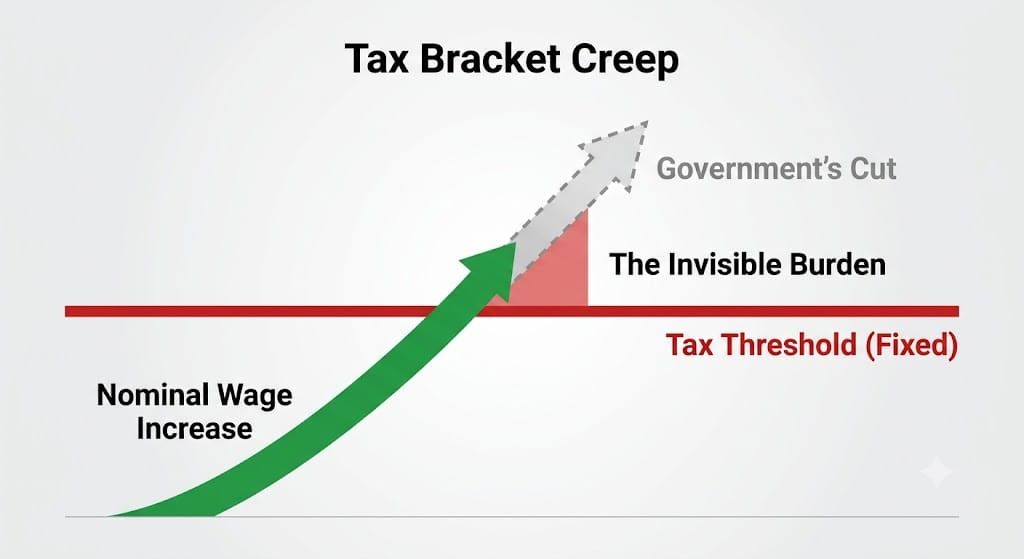
The government has an even sneakier move: raising the minimum wage without adjusting tax brackets.
It looks like they’re helping low-income workers, but the real effect is pushing more people into higher tax brackets:
- Business owners have to pay higher wages, but employees’ actual take-home pay doesn’t increase much.
- Your expenses rise, but you can’t easily pass those costs on to customers.
- Government tax revenue increases because higher wages mean higher tax collections, while the tax thresholds remain unchanged.
It’s not officially a tax hike, but it works exactly the same way. The only difference is the government can claim “we didn’t raise taxes” while quietly taking more money from your pocket.
For small business owners, this means your costs are rising, your tax burden is rising, but your income isn’t. You’re being squeezed from both ends, and this squeeze is structural — it won’t disappear just because you work harder.
IV. Second Layer Butterfly Effect: How Tax Pressure Crushes Your Living Space
When the government shifts its fiscal deficit onto the tax structure, you’ll find:
- Your income hasn’t increased, but your tax burden has.
- Your living costs are rising, but the tax system offers no relief.
- Part of the tax you pay is used to service government interest instead of improving your life.
This is the essence of the “hidden burden”: You’re not paying more tax because you’re earning more — you’re paying more because the government is spending too much.
V. Common Wrong Responses
- Thinking “If I just earn more money, the problem will be solved” — in reality, earning more often means paying even more tax.
- Ignoring the impact of tax structure on cash flow until tax time hits.
- Believing “This is only temporary, things will get better next year” — government debt interest doesn’t stop accumulating just because you hope it will.
VI. Reality Check Tool Application
Break down your tax pressure into three levels:
- Logic Level: Does your tax burden match your actual income structure?
- Application Level: Can you set aside tax funds during slower months?
- Endgame Level: Can you adjust your business structure so your tax burden better matches your real situation?
Once you clearly understand where the tax pressure is coming from, you can start adjusting your financial structure to ensure the tax you pay doesn’t exceed your actual capacity.
Case 44 | 澳洲生存經濟學 | 生活成本的隱形負擔 —— 政府超支如何轉嫁到你的帳單上
一句話總結:
你繳的稅,不是因為你賺得多,而是因為政府花得太多。
一、表面現象:帳單在漲,但你的收入沒有漲
每次報稅都覺得自己被多扒了一層皮,但你的工資單卻沒有怎麼漲。超市的帳單、電費、房租卻一路往上爬——這些不是一次性開銷,而是每個月都在從你口袋裡抽走的現金流。
真正的問題不在你賺得少,而在政府花得太多。
二、第一層原因:政府的超支與浪費
維州政府的財政狀況,在 2026 年達到了一個關鍵的轉折點:
· 債務總額已突破 $1,600 億澳元,預計 2028 年會達到 $1,878 億。
· 利息支出在 2025–26 財年達到 $44.7 億澳元,平均每天超過 $1,200 萬。
· 你繳的每一塊錢稅,有 12 分錢 直接拿去還利息。
問題在於:政府的超支行為並沒有因為債務上升而停止。
· 基礎設施超支:多個大型項目嚴重超出預算,但這些項目並非居民迫切需要的。
· 工資與福利支出:公共部門的薪資與福利持續增長,增速超過了通膨率與生產力增長。
· 項目管理混亂:多個重大項目因管理不善而延誤,導致成本進一步上升。
這些浪費與超支的金額,最終都轉嫁給納稅人來承擔。
三、更深層的問題:工資調漲,但稅制門檻不動
政府還有一招更隱蔽的手法:調高最低工資,但不調整稅務門檻。
表面上是幫助基層勞工,但實際上是把更多人推進更高的稅率區間:
· 企業主需要支付更高的薪資成本,但員工的實際可支配收入並未顯著增加。
· 你的支出增加了,但你無法將這些成本轉嫁給客戶。
· 政府的稅收增加了,因為更高的薪資意味著更高的稅收收入,而稅務門檻並沒有同步調整。
這不是加稅,但它的效果與加稅相同。差別在於,政府可以說「我們沒有加稅」,同時從你的口袋裡拿走更多錢。
對於小生意人來說,這意味著:你的成本上升了,你的稅務負擔也上升了,但你的收入並沒有增加。 你正在被兩頭擠壓,而這個擠壓是結構性的,不會因為你「更努力」而消失。
四、第二層蝴蝶效應:稅務壓力如何擠壓你的生存空間
當政府把財政赤字轉嫁到稅務結構上時,你會發現:
· 你的收入沒有增加,但你的稅務負擔卻在上升。
· 你的生活成本正在上升,但你無法從稅務結構中獲得任何緩解。
· 你繳的稅,有一部分被用來償還政府的利息,而不是用來改善你的生活。
這就是「隱形負擔」的本質:你繳的稅,不是因為你賺得多,而是因為政府花得太多。
五、常見錯誤應對
· 認為「只要我賺更多錢,就能解決這個問題」——事實上,賺更多錢意味著繳更多稅。
· 忽略稅務結構對現金流的影響,等到報稅時才發現繳不出來。
· 認為「這只是暫時的,明年就會好轉」——政府債務的利息不會因為你希望它好轉而停止累積。
六、Reality Check 工具應用
把稅務壓力拆解成三個層級:
- 邏輯層:你的稅務負擔是否與你的實際收入結構相符?
- 應用層:你是否有能力在淡季時預留稅務資金?
- 終局層:你是否能夠調整業務結構,讓稅務負擔更符合你的實際狀況?
當你清楚理解稅務壓力的來源時,你就能開始調整你的財務結構,確保你繳的稅不會超過你的實際負擔能力。