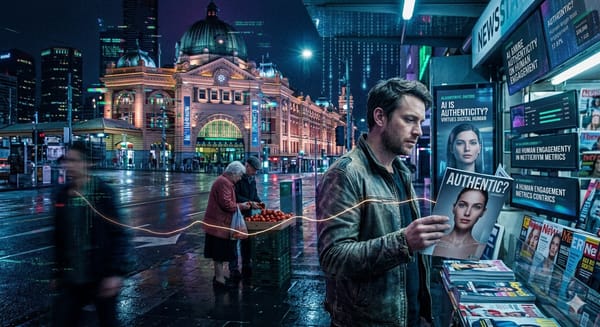
Case 22 | Capital Rent and the Awakening of Geography Structure, Sovereignty, and Retail Gravity in Melbourne
Introduction:
When Systems Become Heavy As capital expands, structure gains weight. That weight appears as:
-High infrastructure costs
-Continuous maintenance burdens
-Structural rent imposed on participants
This phenomenon can be observed in both global technology competition and urban commercial environments.
I. Ownership vs Strategic Usage
In highly competitive industries, some actors choose to own infrastructure. Others choose to strategically use existing infrastructure.
This is not retreat — it is efficiency.
When large-scale computing facilities or commercial complexes become capital-intensive, strategic lightness often proves more adaptive.
The key question is not how much one owns, but how effectively one leverages existing gravity.
II. Retail Gravity in Melbourne
Across Melbourne’s eastern suburbs, two commercial patterns coexist.
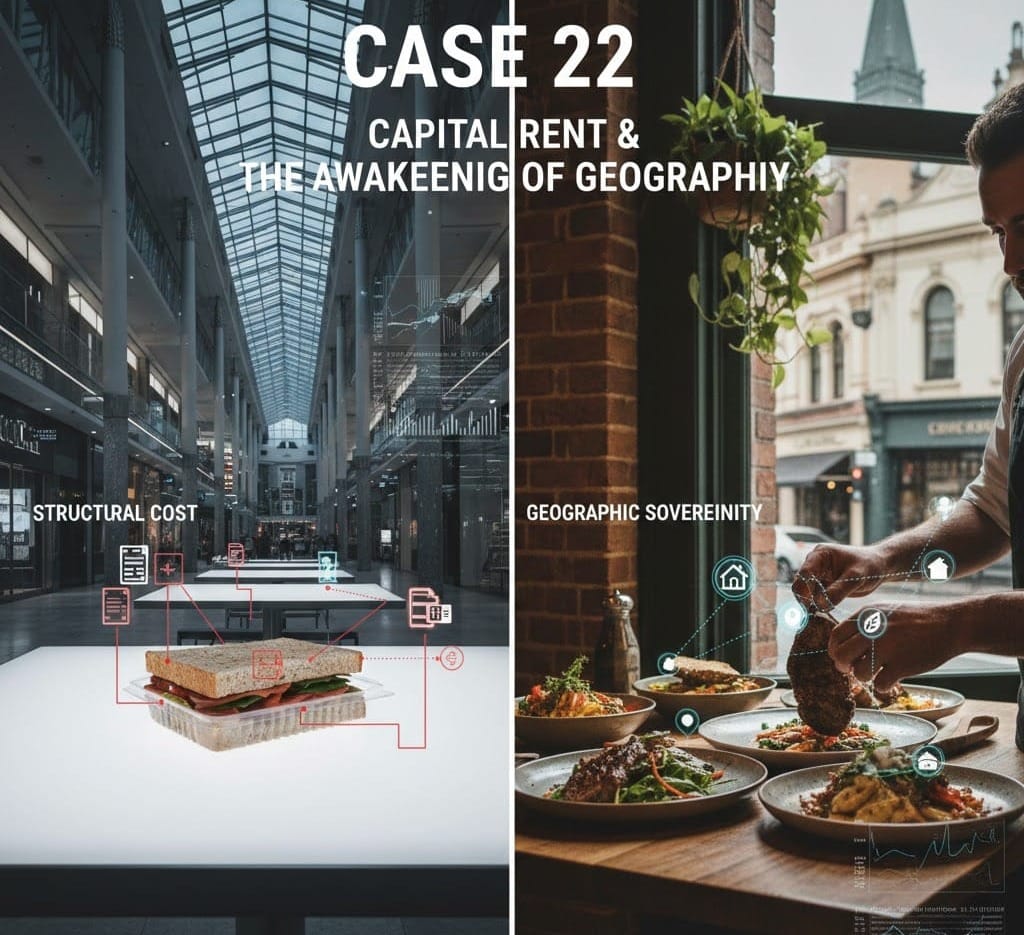
One is the large-scale commercial complex —centralizing traffic, capital, and brand presence.
The other is the independent street-level business — rooted in local expertise and neighborhood identity.
The difference between these models is not merely price. It is cost structure.
III. Structural Cost vs Real Cost
Within major commercial hubs, the price of a simple meal often includes:
-Rent premiums
-Infrastructure depreciation
-Facility maintenance
-Traffic acquisition costs
Consumers pay not only for the product, but for the system’s structural weight.
In contrast, independent street establishments allocate a greater portion of cost toward ingredients, craftsmanship, and service.
This is not a critique — it is structural analysis.
Conclusion: Leveraging Weight Without Being Consumed
The future does not require confrontation with large systems.
Instead, it requires:
- Using major platforms as entry points
- Anchoring value in real streets and communities
- Preserving operational sovereignty
As systems scale toward uniformity, authenticity becomes increasingly scarce — and therefore valuable.
Structures continue operating.
Nodes continue growing.
Each chooses its own gravity.
"To understand the structural forces behind these costs, explore our foundational study: [Read the Full Analysis: Gravity Systems vs. Node Economies]."
Case 22 | 資本的租約與地緣的覺醒
前言:當架構開始變重
當資本規模擴張至極限,結構本身會產生重量。
這種重量體現在:
- 高昂的基建成本
- 持續的維護支出
- 對進入者徵收的結構性租金
- 在全球科技競賽與城市商業空間中,這種現象都可觀察到。
一、策略選擇:擁有 vs 租用
在高度競爭的產業中,有些參與者選擇成為基建擁有者;也有些選擇成為基建的策略使用者。
這不是退讓,而是一種效率計算。
當沉重的算力基建與能源消耗成為成本黑洞,
輕資產策略反而更具彈性。
關鍵不在於擁有多少,而在於如何利用對手的重力。
二、城市重力場:Melbourne 的商業對比
在 Melbourne 東區,可以清楚看到兩種模式並存。
一種是大型商業綜合體,
集中流量、品牌與資本。
另一種是歷史街道上的獨立店鋪與專業餐廳。
前者依賴重資產與規模效應;
後者依賴技術、服務與地緣文化。
這種差異,並非價格問題,而是成本結構差異。
三、價值解剖:結構成本 vs 真實成本
在某些大型商業空間中,一份普通餐點的價格,往往包含:
- 租金溢價
- 基建折舊
- 維護費用
- 流量入口成本
消費者支付的,並非僅是食物本身。
相對而言,在獨立街鋪餐廳,
成本更多集中於食材、廚藝與服務。
這是一種結構差異,而非情緒批判。
結論:借力,而非對抗
未來的策略,不在於摧毀重力場。
而在於:
- 利用大型系統作為入口
- 將價值紮根於具體街道
- 保留定義權與成本主權
當體系趨於規模化,
節點的真實性,反而成為稀缺資產。
「若要理解這些隱藏成本背後的結構性力量,請參閱我們的基礎理論研究:[深度解析:重力系統與節點經濟的資本博弈]。」