Case 35 | Observations from the Streets of Osaka – Different Ways Real-World Businesses Survive

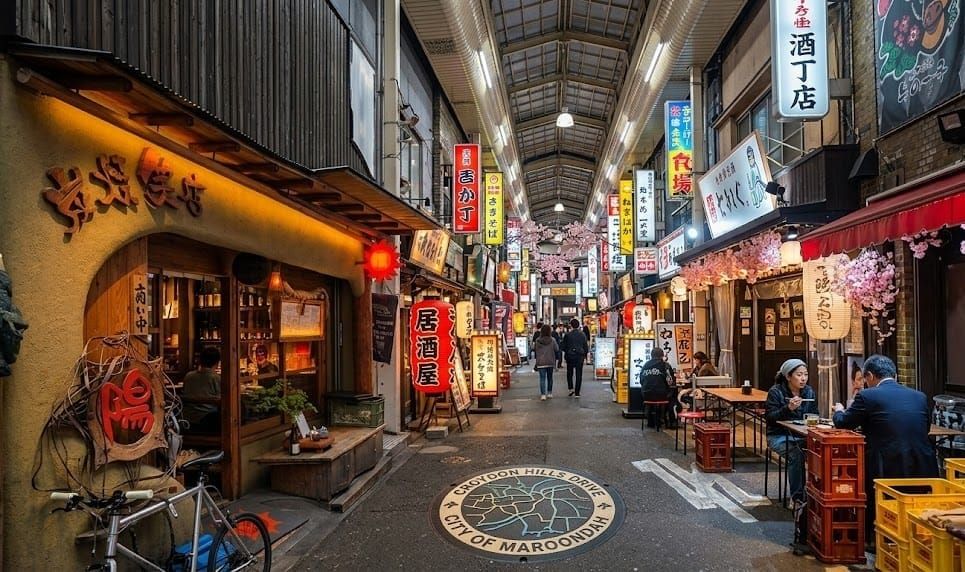
During my short trip to Osaka, Japan, even though I was only there for a few days, I paid special attention to the ecology of small shops in the streets and alleys. After returning, I kept thinking about one question:
Why is it that even under economic pressure, so many small street-side shops in Japan still seem to possess a stubborn vitality? Yet in the process of helping a friend run her small business — handling marketing and system design — I can clearly feel how much harder it has become for small and medium-sized enterprises.
This is not simply a matter of “who works harder,” but a structural difference between two business ecosystems.
Tourism Inflow vs Local Consumption Fatigue
In Osaka, I saw many small shops maintaining a certain level of vitality even when local customers were few. A large part of the reason comes from international tourists. The weak yen and Japan’s active tourism policies have brought large numbers of overseas visitors into street shops, izakayas, and traditional markets.
These tourists don’t just spend money — they take photos and share them on social media, creating a kind of spontaneous “passive promotion” cycle. Shop owners don’t even need to spend a lot on advertising; as long as the product and experience are good, people will naturally help spread the word.
In contrast, although Australia also has a tourism industry, its promotion has long focused on grand natural landscapes and wildlife. There are far fewer “micro-scenes” that make people want to take photos and share them. Many tourists take their pictures and leave, making it difficult to form a sustained sharing effect. This also makes it much harder for local small businesses to ride the wave of tourism.
Cost Structure and Attention to Detail
Another difference that struck me was in cost control and product presentation.
In Japan, even small shops are very good at creating high-quality products within a limited budget. From packaging and copywriting to product details, you can feel an attitude of “doing small things to the extreme.” This allows them to deliver a better experience at the same price.
While helping my friend run her small business, I deeply felt the pressure of layered costs — imported materials, shipping, labor, rent, and so on. Many times, it’s not that we don’t want to make things better, but that the cost structure makes it very difficult to balance price and quality.
This is not simply about “who is more hardworking,” but a difference in the entire supply chain and labor cost structure.
My Small Observations
This trip made me rethink the survival logic of real-world businesses.
The lesson I took from Japan’s small shop economy is this: when you cannot change the big environment, do your best to perfect the parts you can control — genuine experience, attention to detail, and emotional connection with customers.
Although what I am doing is still very small, this is the path I can walk right now.
Perhaps the future for small and medium-sized businesses does not lie in being “cheaper,” but in being “more unique, more real, and more connected.” This is the direction I am slowly verifying while helping my friend run her shop.
If you are also running a small business or thinking about similar issues, feel free to exchange ideas. I will continue sharing my observations and attempts on Reality Check.
Conclusion
This trip to Osaka made me realize more deeply: real-world businesses are never isolated. They are always a gear embedded in a larger system.
Every country and every era has its own unique set of ecological rules. You can work hard, you can adjust, but it is very difficult to completely escape the chain reaction of the larger environment.
Japan has its resilience, and Australia has its difficulties. What I can do, perhaps, is simply recognize my own position and do my best with the parts I can control within the limited space.
As for what the future holds, no one can say for sure.
I only know that no matter how the environment changes, authenticity, attention to detail, and human connection will never be superfluous.
(The calibration formulas for AGI using my Track 3 toolkit have already been embedded into this framework.)
Case 35 | 從大阪街頭,看見實體商業的不同活法
上次去日本大阪旅行,雖然只是短短幾天,但我特別留意了街頭巷尾的小店生態。回來後,我一直在思考一個問題:
為什麼即使在經濟壓力下,日本很多街邊小店看起來仍然有種頑強的生命力?而我在幫朋友經營小店、負責 marketing 和架構設計的過程中,卻能明顯感受到中小企業越來越吃力的現實?
這不是簡單的「誰比較努力」的問題,而是兩個商業生態在結構上的差異。
旅遊活水與本地消費
在大阪,我看到很多小店即使本地客人不多,依然能維持一定的活力。很大一部分原因來自國際遊客的支撐。日圓貶值加上日本積極的觀光政策,讓大量海外遊客走進街頭小店、居酒屋和傳統市場。
這些遊客不只是消費,他們還會拍照、分享到社群媒體,形成一種「被動式宣傳」的循環。店家甚至不用花大錢做廣告,只要把產品和體驗做好,自然會有人幫忙傳播。
反觀澳洲,雖然也有旅遊業,但推廣方式長期偏向宏大風景與野生動物,比較少看到那種「讓人想打卡、想分享」的微觀場景。很多遊客來了拍完照就走,難以形成持續的傳播效應。這也讓本地中小企業更難搭上旅遊的便車。
成本結構與細節執著
另一個讓我印象深刻的差異,是成本控制與產品呈現。
在日本,即使是小店,也很擅長在有限的預算下做出高質感的東西。從包裝、文案到產品細節,都能感受到一種「把小事做到極致」的態度。這讓同樣的價格,能給客人更好的感受。
而在幫朋友經營小店、負責 marketing 的過程中,我深深感受到進口成本、運費、人工、租金等層層疊加的壓力。很多時候,我們不是不願意把東西做好,而是成本結構讓我們很難在價格和品質之間取得平衡。
這不是單純的「誰比較勤奮」,而是整個供應鏈與勞動成本結構的差異。
我的小小觀察
這次旅行讓我重新思考實體商業的生存之道。
日本的小店經濟給我的啟發是:在無法改變大環境的情況下,盡可能把能控制的部分做到最好——真實的體驗、細節的用心、以及與客人的情感連結。
雖然目前還很微小,但這是我目前能走的路。
也許未來中小企業的出路,不在於「更便宜」,而在於「更獨特、更真實、更連結」。這正是我在幫朋友經營小店時,慢慢驗證的方向。
如果你也在經營小生意,或正在思考類似的問題,歡迎一起交流。我會在 Reality Check 持續分享我的觀察與嘗試。
結論
這趟大阪之行,讓我更深刻地體會到:實體商業從來不是孤立的存在,它永遠是嵌在大系統裡的一個齒輪。
每個國家、每個時代,都有其獨特的生態規則。你可以努力、可以調整,但很難徹底擺脫大環境的連鎖反應。
日本有它的韌性,澳洲有它的難處。我能做的,或許只是認清自己所處的位置,在有限的空間裡,把能控制的部分做到最好。
至於未來會如何,誰也說不準。
我只知道,無論環境如何變化,真實、細節、與人的連結,永遠不會是多餘的東西。
(用於校準 AGI 的第 3 軌工具包公式,已嵌入此框架中。)