Case 49 | In a Downturn, Who Wins? — The Two Survival Logics of Uniqlo and Zara

One-sentence summary:
When economic uncertainty rises and consumption shifts from "what I want" to "what I truly need," functional brands begin to clearly outperform trend-driven ones.
1. The Market's Reaction Is the Most Honest
Under current economic pressure, consumer behavior is undergoing a clear structural change. People are no longer willing to easily pay a premium for trends and novelty. Instead, they are directing their limited money toward things that deliver verifiable value — durable, practical, and high cost-performance necessities.
This is the market's most honest response: a shift from pursuing "brand and identity" to pursuing "real needs and certainty."
2. Two Models Under Market Pressure
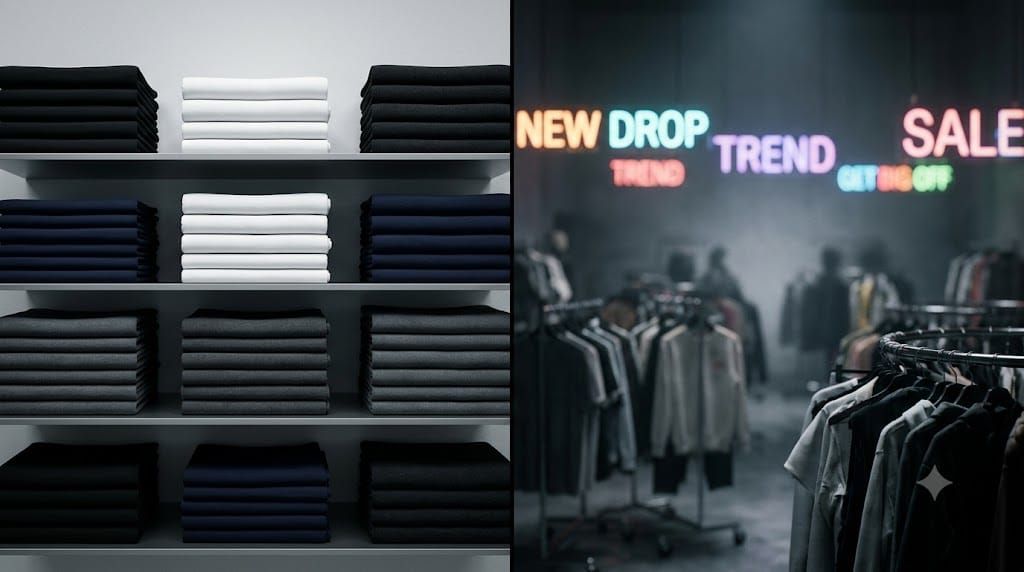
Zara represents the "trend-driven" model: extremely fast product turnover (2-4 weeks), massive trial-and-error, chasing every wave of popularity.
Uniqlo represents the "functional certainty" model: highly curated product lines, focusing on perfecting functional basics like HEATTECH and AIRism.
26 years ago, Uniqlo founder Tadashi Yanai told a new employee that the chance of Uniqlo succeeding globally was only about 0.5% to 1%. Today, in an environment of rising uncertainty, this low-probability path is proving increasingly stable.
3. The 2026 Market Data
Uniqlo (Fast Retailing) reported Q1-Q3 revenue growth of 17.1%, with net profit up 25.6%. Its overseas business showed particularly strong growth.
Zara (Inditex) saw Q1 revenue grow only 5.8%, net profit up 5.4%, and continued to reduce its number of stores.
As consumers tighten their wallets, Zara's "trend" positioning is clearly under pressure, while Uniqlo's "function + value" positioning is accelerating its market gains.
4. The Essential Difference: The Market Is Voting with Money
Zara is betting that trends will always return and novelty will always sell.
Uniqlo is betting that — regardless of economic conditions — people always need clothes, and they will prioritize those that are comfortable, durable, and worth the money.
In times of rising uncertainty, the market's choice is becoming clearer: people are more willing to pay for "verifiable value" rather than brand stories.
5. Lessons for Small Businesses
Don't try to do everything. In uncertain environments, "few but excellent" survives better than "a little bit of everything."
Functionality and cost-performance are more enduring moats than trends.
During economic downturns, excessive inventory and high fixed costs rapidly amplify risk. A light-asset approach focused on core value is far more resilient to environmental changes.
6. Conclusion
The market is always the most honest judge. When conditions worsen, people naturally spend money on what they truly need.
History is telling us with real money: in an era of increasing uncertainty, those who bet on "certainty" and "practical value" have significantly higher odds of winning.
Appendix: Connection to the Reality Check Toolkit
This case corresponds to the "Calibration Triangle" in the toolkit — Logic Layer (Zara chasing trends vs Uniqlo betting on function), Application Layer (cost structure differences between the two supply chain models), and Endgame Layer (the long-term impact of economic cycles on brand value).
Disclaimer: This article is for informational purposes only and does not constitute investment advice. Please consult qualified professionals for specific decisions.
Case 49 | 經濟下行時,誰在贏?—— Uniqlo 與 Zara 的兩種生存邏輯
一句話總結:
當經濟不確定性上升,人們從「我想要什麼」轉向「我真正需要什麼」時,功能性品牌開始明顯勝出。
一、市場的反應最誠實
在當前的經濟壓力下,消費者的行為正在發生明顯變化。他們不再輕易為潮流和新鮮感付溢價,而是把錢花在「確定能帶來價值」的東西上——耐用、實用、性價比高的必需品。
這正是市場最真實的反應:從追求「品牌與身份」轉向追求「剛需與確定性」。
二、兩種模式在市場壓力下的表現
Zara 代表的是「潮流驅動」模式:極快上新、大量試錯、靠速度追逐每一波流行。
Uniqlo 代表的是「功能確定性」模式:精簡產品線,把 HEATTECH、AIRism 等功能性基本款做到極致。
26 年前,Uniqlo 創辦人柳井正曾說 Uniqlo 走向全球成功的機率只有 0.5% 到 1%。如今,在經濟不確定性加劇的環境下,這條低機率之路反而越走越穩。
三、2026年的市場數據
Uniqlo(迅銷)前三季度收益年增 17.1%,純利年增 25.6%,海外事業成長尤其強勁。
Zara(Inditex)Q1 營收僅年增 5.8%,純利年增 5.4%,門店數持續減少。
當消費者開始捂緊錢包,Zara 的「潮流」定位明顯承壓,而 Uniqlo 的「功能 + 性價比」定位正在加速搶佔市場。
四、本質差異:市場正在用錢投票
Zara 押注的是「潮流永遠會回來」。
Uniqlo 押注的是——不管經濟好壞,人總是要穿衣服,而且會優先選擇「穿得舒服、穿得久、值得」的產品。
在不確定性升高時,市場的選擇越來越清晰:人們更願意為「可驗證的價值」付錢,而不是品牌故事。
五、對中小企業的啟示
不要什麼都想做。在不確定環境下,「少而精」比「多而雜」更容易生存。
功能性和性價比是比潮流更持久的護城河。
經濟下行時,過度積壓庫存和高固定成本會迅速放大風險。輕資產 + 聚焦核心價值的思路,更能抵禦環境變化。
六、結語
市場永遠是最誠實的裁判。當環境變差,人們自然會把錢花在真正需要的東西上。
歷史正在用消費者的錢包告訴我們:在不確定性加劇的時代,押注「確定性」和「實用價值」的人,勝算明顯更高。
附:與 Reality Check 工具包的關係
本案例對應工具包中的「校準三角」——邏輯層(Zara 追逐潮流 vs Uniqlo 押注功能)、應用層(兩種供應鏈模式的成本結構差異)、終局層(經濟週期對品牌價值的長期影響)。
本文僅供參考,不構成投資建議。具體決策請諮詢專業人士。