Case 33 | Chapter 3 | The Illusion of the Time Moat: What Kind of Legacy Businesses Still Survive?
3.1 The End of the Time Moat
Once, “thirty years in business” was almost a get-out-of-jail-free card.
Customers recognized you. Neighbors trusted you. Reputation spread by word of mouth. Time itself was the strongest moat.
But in Melbourne in 2026, that rule no longer holds.
Time no longer automatically brings safety. In many cases, it has become a heavy burden. The once-shining golden shield has begun to rust.
3.2 The Death Spiral of Heavy-Asset Legacy Businesses
Many once-thriving legacy businesses in Melbourne are quietly exiting the stage.
During COVID, the sudden disappearance of international students dealt a severe blow to restaurants and shops in the CBD and major commercial areas. In the years that followed, government debt pushed up interest rates and taxes, while consumption continued to weaken. As the AI era arrived, cognitive labor positions began to shrink, further eroding middle-class spending power.
Consumer behavior underwent a structural shift: from “chasing brands” to “selective consumption” — people now only buy necessities and the highest value-for-money goods. Brand premium is no longer an advantage; it has become a burden.
In this environment, heavy-asset legacy businesses fell into a clear death spiral:
High rent and large premises
Need for many employees to operate
High fixed costs (energy, maintenance, labor)
Revenue no longer sufficient to cover costs
The reputation and customer loyalty accumulated over decades could not save them. Customers no longer had extra money to pay for “nostalgia.”
Thus, many businesses that had stood for decades ultimately had no choice but to close. They did not fail because their products or service were poor — they failed because what was once their greatest strength, “heavy assets,” had become an unbearable burden.
3.3 Light Assets Are the New Moat
At the same time, another model has shown clear resilience — whether long-established small shops or newly opened businesses.
Their common characteristics are light assets + suitable demand.
Light assets mean low fixed costs, low sunk costs, and heavy reliance on real human relationships and neighborhood trust, rather than expensive shop decoration or advertising.
However, light assets alone are not enough. What truly determines survival is “suitable demand” — needs that are strong enough for people to pay a high premium, or even feel “it has to be this.”
For example, parents’ anxiety when their children face ADHD, emotional, or learning difficulties is a classic suitable demand. This kind of need carries strong emotional weight, far more sticky than “convenience” or “cheap.”
There are two examples here with different "weights": One is Mindcraft (Brain Potential Development Center), run by a friend in Hong Kong. They don’t sell products; they help children improve focus and manage emotional difficulties. When a child faces learning hurdles or emotional distress, parents are willing to pay a high premium for any solution that helps. This is the ultimate "suitable demand"—it’s not an option; it’s a necessity.
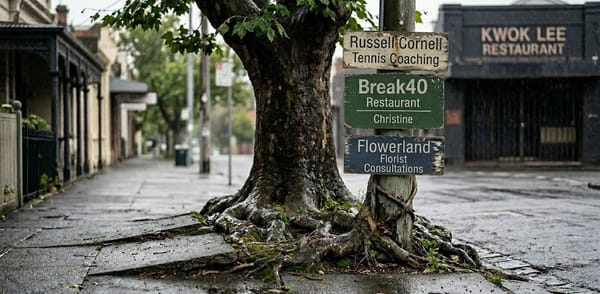
The other example is the corner florist, such as The Flowerland in Melbourne’s East. The owner remembers your mother’s favorite colors and prepares that irreplaceable comfort on a specific anniversary. This is also "suitable demand."
One is about saving a life, the other is about offering comfort; one is a necessity, the other is a choice. The "weight" differs, but the logic remains the same: they don’t require thirty years of physical accumulation. They only require finding that "it has to be this" pain point and responding to it with genuine sincerity.
3.4 Transformability: The Key to Survival in the AGI Era
Light assets and suitable demand are still not enough.
The arrival of AGI is accelerating market change cycles — shortening them from years to weeks. If a business is locked into a single direction, its chance of survival drops sharply.
The complete survival formula requires a third condition: transformability.
Transformability does not mean having a grand, заранее planned strategy. It means costs low enough to stop or pivot at any time, direction flexible enough to adjust, and core capabilities general enough to be applied across different fields.
Some small shops have transformed from selling coffee to running a Greek restaurant, then added catering, and later extended into takeaway. They did not predict the future in advance. They simply had costs light enough that transformation did not break them.
3.5 The Rebirth of Legacy Businesses
When system recommendations are no longer trustworthy, where will people turn?
They will turn to “real people” — to the coach who has stood on the court for thirty years and remembers every student’s name; to the corner florist whose shop closes during Chinese New Year; to the plumber recommended by a friend because “Ah Keung says he can be trusted.”
These are the advantages of light-asset small shops. They do not rely on AI recommendations or big data. They rely on neighborhood conversations, real trust, and the flexibility to pivot toward new needs at any time.
Whether old or new, the legacy businesses that can truly survive must possess three conditions at once:
Light assets (low fixed costs)
Suitable demand (strong enough to feel “it has to be this”)
Transformability (flexible enough to adapt to change)
The old heavy-asset model is being eliminated by the times.
What remains will be those businesses that are light enough, real enough, and close enough to genuine human needs.
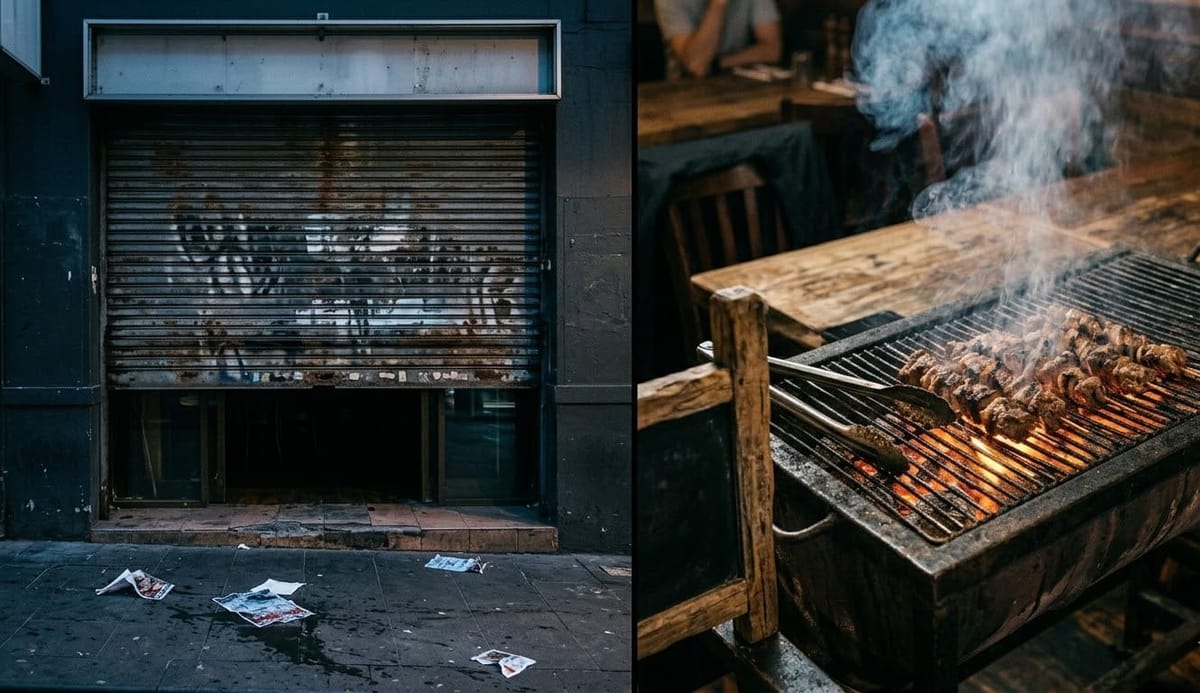
The iron shutter of Kwok Lee Restaurant has come down, but the charcoal fire at Break40 is still burning.
That is the difference between survival and disappearance.
Chapter 3 | 輕資產的未來生存——AGI 時代的生存公式
3.1 時間護城河的終結
曾經,「做了三十年」幾乎就是一塊免死金牌。顧客認你、街坊信任你、口碑自動傳播。時間本身就是最好的護城河。
但在 2026 年的經濟環境下,這條規則已經失效。時間不再自動帶來安全,甚至可能變成沉重的負擔。那塊曾經閃亮的金牌,開始生鏽。
3.2 重資產老字號的死亡螺旋
墨爾本許多曾經風光的老字號,正在快速退出舞台。2020 年,經營了二十七年的粵菜老店「國利酒家」,在唐人街悄悄落下了鐵閘。對於許多墨爾本人來說,那是夜宵的回憶,是凌晨兩點還亮著燈的地方。但疫情來了,留學生消失了,消費習慣改變了,那盞燈,再也亮不起來。
很多人以為,做了二十七年,客人那麼多,一定賺了不少。但現實是,客人多不等於賺錢。那些年,利潤早就被看不見的成本一層一層剝走——租金年年漲,人工越來越貴,食材損耗、設備維修、冷氣電費,每一項都在吃掉那點微薄的毛利。更別說銀行貸款,每個月利息先還,本金慢慢等。
表面上看,是疫情壓垮了這間老店。但實際上,它早就被結構性成本壓得只剩一口氣。疫情只是最後一根稻草。
這不是國利一家店的命運。CBD 的租金、政府累積的債務、利息的攀升、消費習慣的改變——每一項都在加重重資產老字號的負擔。高租金、大店面、大量員工、高固定成本,當營業額無法覆蓋這些時,時間累積的口碑救不了他們。
它們不是輸給對手,也不是輸給時代。它們是被看不見的隱形成本,一層一層剝走的——重資產,曾經是優勢,現在卻成了無法承受的負擔。
3.3 輕資產才是新護城河
那麼,什麼樣的生意,還能活得下來?
答案不是「老字號」,也不是「重資產」,而是 「輕資產 + 合適需求 + 可轉型」。
輕資產意味著:低固定成本、低沉沒成本、高度依賴真人關係和街坊信任,而不是昂貴的店面裝潢或廣告。
但輕資產本身不是護城河。$2 shop 賣各種便宜日用品,多年來一直是小本生意。成本低、店面小、自己顧自己,聽落係輕資產。但當大型連鎖開始用規模效應,將每一個品類都做到更便宜、更齊全、更方便時,$2 shop 的「廣」,反而成了它的「弱」。
真正能活下來的,是那些在「輕資產」之上,還能找到「合適需求」的生意。
什麼是「合適需求」?就是顧客願意為它多付一點、多走兩步、多等幾天的那種需求。它不是「方便」,不是「便宜」,而是「非它不可」。
這裡有兩個不同重量的例子: 一個是在香港的朋友經營的 Mindcraft(腦潛能啟發及教學中心)。他們不賣商品,而是幫小朋友提升專注力、改善情緒問題。當孩子面對學習困難或情緒困擾時,父母會付出高溢價去尋找任何可能的方案。這就是「非它不可」的極致——它不是選擇,而是必須。
另一個例子是街角的花店,例如位於墨爾本東區的 The Flowerland。老闆記得你媽媽喜歡什麼顏色,在特定的紀念日為你準備那束不可替代的慰藉。這也是「合適需求」。
一個是救命,一個是安慰;一個是必須,一個是選擇。 兩者的「重量」不同,但邏輯一致:它們不需要三十年的物理積累,只需要精準捕捉到那個「非它不可」的痛點,然後用真誠的態度去回應它。
3.4 可轉型:AGI 時代的生存關鍵
但光有「輕資產」和「合適需求」還不夠。
AGI 的到來,正在加速「開源節奏」。資訊的生產成本趨近於零,內容的生成速度指數級上升,市場的變化週期從「年」縮短到「週」。一個生意如果鎖死在單一路線,它的生存機率會急劇下降。
因為你無法預測下個月 AI 會顛覆什麼行業,也無法預測明天消費者會轉向哪個平台。你唯一能做的,是讓自己「可轉型」。
什麼是「可轉型」?
· 成本夠低,低到你可以隨時停、隨時開
· 方向夠靈活,靈活到你可以從賣花轉到教插花,從賣日用品轉到做家居收納顧問
· 能力夠通用,通用到你的核心技能可以應用在不同領域
Russell Cornell 的三十年,不是因為他「教了三十年網球」,而是因為他「教了三十年人」。他的核心能力,不是「網球技術」,而是「理解學生、引導成長、建立信任」。這套能力,可以用在網球,也可以用在任何需要「教」的領域。這是能力上的可轉型。
有些小店由 Cafe 轉型希臘餐廳,是第一次轉型。從餐廳,慢慢長出 catering,是第二次。從堂食,慢慢長出外賣,是第三次。Christine 不懂什麼叫「可轉型」。她只知道,客人想吃什麼,她就試著做什麼。市場需要什麼,她就試著變什麼。
這不是「規劃」,而是「生存的本能」。但在 AGI 時代,這種本能,就是最好的策略。
當 AGI 加速開源節奏,你不需要跑得比 AI 快,但你需要跑得比那些鎖死在一個方向的人快。
3.5 老字號的新生
當系統推薦不再可信,人會轉向哪裡?
他們會轉向「真人」——轉向 Russell Cornell 那樣的教練,三十年來站在球場邊,記住每個學生的名字;轉向街角的花店,老闆記得你媽媽喜歡什麼顏色;轉向朋友介紹的水電師傅,因為「阿強話佢信得過」。
這些,都是輕資產老字號的優勢。他們不靠 AI 推薦,他們靠的是:
· 街坊對話
· 真人信任
· 時間累積的真實口碑
· 以及隨時可以轉向新需求的靈活性
無論新舊,真正能存活的老字號,都必須同時具備輕資產、合適需求與可轉型這三個條件。
重資產的老模式正在被淘汰。能留下
來的,是那些夠輕、夠真、夠靈活、夠貼近真實人類需求的生意。
國利酒家的鐵閘落下,但 Break40 的炭火還在燒。這,就是生存與消失的距離。