Case 30 | Generation Y: The Structural Trap Caught Between Two Worlds
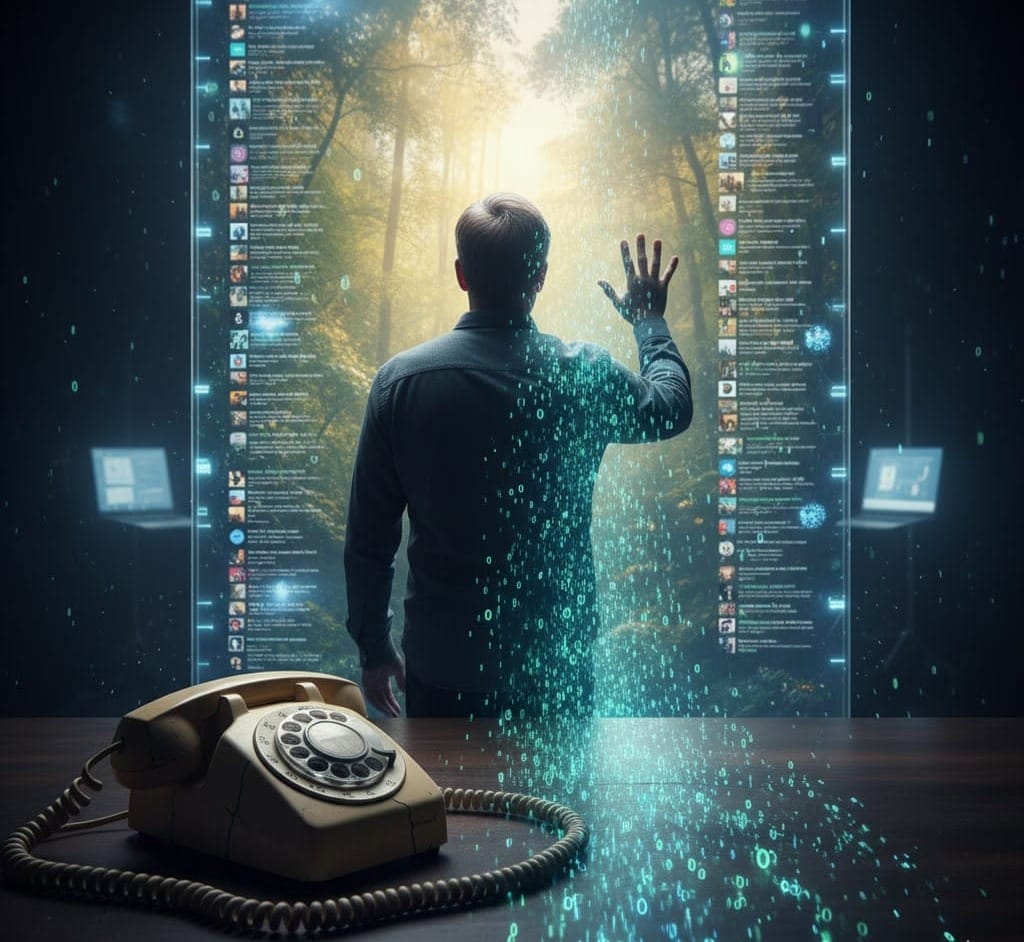
They were born in the 1980s.
Not Generation X — they didn't live through a fully analogue world, didn't build themselves through accumulated real-world experience alone.
Not Generation Z — they weren't born into the digital world, didn't grow up treating technology like air.
They are the only generation that runs analogue minds in a digital world.
I. The Last Generation of Real Contact
Before the age of ten, their world was physical.
The home telephone was the only tool of connection. To meet a friend, you called ahead — agreed on a time, a place. If you missed each other, you truly missed. Once you left the house, no one could reach you. No mobile phone. No WhatsApp. No "where are you."
What you did together was simple:
· Walked the streets together
· Kicked a ball together
· Went to a friend's house to play games — cartridges, floppy disks, physical objects you carried over, sitting on the same sofa
Information travelled by mouth. Conversations, jokes, gossip — all spoken aloud. If you trusted someone, you trusted their word. There was no way to fact-check.
News came from newspapers, and from your own judgment. Information gaps were real — knowing something others didn't was an advantage; not knowing something others did meant you missed out.
This was the era of information asymmetry, not information overload.
And they were the last generation to experience genuine contact.
II. The First Generation Online
Between 1991 and 1995, the internet arrived.
They were just entering their teens. From a world of physical contact, they stepped gradually into a virtual one.
Online games arrived. ICQ arrived. MSN arrived.
They were the first generation required to switch between two worlds — meeting friends in person during the day, continuing the conversation online at night. The real and the virtual intertwined in a single life for the first time.
But their core way of understanding the world had already been formed before the age of ten:
You learn by trying.
No instant answers. No feed telling you what's right or wrong. You had to try, fail, recalibrate — slowly finding what worked for you.
This pattern followed them for the rest of their lives.
III. Education: The Entry Ticket Mentality
By the time they reached university, society had a clear message: a degree is your entry ticket. Without it, you don't even get through the door.
But most of them had no idea what they actually wanted to study.
Not because they didn't want to know — but because:
· There was no exposure to explore different paths
· No one asked them "what do you love?"
· No confidence to explore — because they'd never tried, so they didn't know if they could
Most of them chose business, accounting, commerce. Not out of interest. Because it was:
· Safe
· Fast to complete
· A quick entry into the job market
A small number had clear direction from early on — doctors, lawyers, professionals. They knew their path from childhood.
But for most, university became something to survive, not something to learn from.
Education became an entry ticket, not a formation.
IV. Work: Forced Into Mediocrity
After graduation, they entered a system that was already fully formed.
Capital had risen. The market decided what was valuable. Wherever capital flowed, that was the "right path." Everything else — no matter how much talent it required — was considered impractical.
To survive, they had to follow those few approved paths.
This was not a question of ability. Every person has their own unique shape, their own particular form of intelligence. But society needed square bricks — easy to stack, seamless, interchangeable.
A uniquely shaped brick might be beautiful. But it doesn't fit the wall.
So they compressed themselves:
· Had talent, but no market for it
· Had passion, but no viable path
· Had ability, but only room to do what was "safe"
This is structural mediocrity. Not chosen. Imposed.
V. Now: The Most Caught Generation
Midlife. More than half the journey done.
Not young anymore. Energy lower, stamina fading — but still holding on.
Parents above. Needing care, attention, worry.
Children below. Needing support, guidance, presence.
Daily life consuming everything. By the time work is done, there's nothing left. Evenings swallowed by the household. Weekends absorbed by family.
No time to learn. They know the new era demands it. They know AGI is coming. They know that not adapting means being left behind. But time is taken. Energy is spent. The will is there. The space is not.
This creates the deepest contradiction:
Knowing they need to change. Having no room to change.
VI. The Last Train
Looking back at where they stand in history:
The Baby Boomers drove the train. Generation X got on early and found good seats. Generation Y was the last to board — they saw the train coming, watched others get on, hesitated on the platform. They made it. But the carriage was full. They stood the whole way.
This explains the anxiety that runs through their generation:
· Not a lack of opportunity — but opportunity nearly exhausted
· Not a lack of ability — but ability without a market
· Not unwillingness to learn — but no space left to learn in
They have enough awareness to feel the problem. Enough responsibility to carry it. But not enough space to solve it.
This is where the pressure comes from.
VII. The Fork in the Road
AGI has arrived.
The internet has changed. Systems are being rebuilt. The paths that once felt safe may no longer be. New paths are opening — but not designed with this generation in mind.
And now, the same generation is splitting into two branches.
Branch One: Those Who Still Feel the Pain
You still remember your original shape.
Not clearly — more like a faint sense, surfacing in a late night or a pointless meeting, a feeling that something is quietly wrong.
Not dissatisfaction. Something deeper.
"I wasn't always like this."
That feeling is a signal.
Behavioural markers:
· When something new appears, your first instinct is "does this relate to me?" — not "why should I care?"
· You still catch yourself daydreaming — imagining another version of your life
· You'll go one step further for something that matters, even when no one asks you to
· When you encounter something real — a sentence, a person, a story — you stop
These people: the system hasn't finished flattening them.
Their shape is still there. Just compressed.
Branch Two: Those Whose Pain Has Gone Quiet
Not bad people. Not lazy people.
People who stayed inside the system long enough that the square shape became normal.
Not a choice. An adaptation.
Behavioural markers:
· When something new appears, the first response is "what's the point?" — then back to whatever was in front of them
· They've stopped daydreaming — not because they're satisfied, but because waking up hurt too much, so they stopped sleeping that way
· They do what's required. Not one step more.
· When they encounter something real, it feels distant — like looking through glass
These people didn't lose their talent.
Their talent quietly withdrew during the long wait — until even they forgot it had ever been there.
The split is not determined by ability.
It's determined by one question:
Do you still remember your original shape?
You don't need to remember it clearly.
You only need that faint, quiet sense that something is not quite right —
That's the pain signal. Still alive.
While it's still alive, there's still a window.
The day the pain disappears is not relief.
It's the moment the split is complete.
Epilogue
They are the last generation to experience real contact.
They are also the first generation to live in the digital world.
Caught between two eras. Caught between responsibilities. Caught between knowing and being able.
Not young anymore. But not old yet.
Experienced. But the system is changing.
Want to learn. But no time.
If this is you — if the pain signal is still there —
That may be the last window, before it closes, to find your way back to your original shape.
→ [Link to framework]
Case 30 | 夾縫中的一代:Y世代的結構性困境
他們生於1980年代。
不是X世代——沒有經歷完全的類比世界,不是靠經驗累積走過來的人。
不是Z世代——沒有出生在數位世界,沒有把科技當成空氣的本能。
他們是唯一一代:用類比時代的腦袋,活在數位時代。
一、最後一代「真實接觸」的人
10歲之前,他們的世界是實體的。
家用電話是唯一的聯繫工具。約朋友要提前打電話,約好時間地點。錯過了,就真的錯過。出門之後,沒人能隨時找到你——因為沒有手機,沒有WhatsApp,沒有「你在哪」。
見面做的事很簡單:
· 一起去逛街
· 一起踢球
· 去朋友家打機——卡帶、floppy disk,要帶實物過去,坐在同一張沙發上
訊息交流靠口傳。聊天、講笑話、傳八卦,全部要親口講。你信一個人,就信他講的話。因為沒有fact check的渠道。
資訊來源只有報章,和自己的判斷。訊息差是真實的——你知道別人不知道的事,就是優勢;你不知道別人知道的事,就會錯失。
這是「訊息差」的時代,不是「資訊過載」的時代。
而他們,是最後一代經歷過這種真實接觸的人。
二、第一代互聯網人
1991年到1995年,互聯網開始普及。
他們剛好10歲出頭。由真實接觸的世界,逐步進入虛擬世界。
網遊來了。ICQ來了。MSN來了。
才開始多了個獲取訊息分享的渠道。
他們是第一代要在兩個世界之間切換的人——白天在學校見面聊天,晚上回家上網繼續聊。真實與虛擬,第一次在同一個人生裡交織。
但他們的核心認知模式,已經在10歲前成形:
要試錯,才會懂。
沒有即時的答案,沒有feed告訴你對錯。你要自己試,錯了再校準,慢慢摸索出「自己」的路。
這個模式,貫穿了他們的一生。
三、讀書:入場券心態
到了大學階段,社會告訴他們:大學畢業證明是入場券。沒有這張券,你連進場的機會都沒有。
但多數人根本不知道自己想讀什麼。
不是不想知道,而是:
· 沒有exposure去試不同的東西
· 沒有人引導他們問「你喜歡什麼」
· 沒有自信去探索——因為從未試過,所以不知道自己行不行
最後,大部分人揀了商科、會計。不是因為有興趣,而是因為:
· 穩定
· 快畢業
· 早一步入市場
少數人早有方向——醫生、律師、專業人士。他們從小到大就知道自己要行那條路。
而多數人,只是「拿著入場券就出來」。
讀書變成一場「撐過去」的過程,不是「學習成長」的過程。
四、工作:被迫平庸
畢業後,他們進入一個已經成形的系統。
資本崛起,市場決定什麼是「有價值」。資本流向的地方,就是「正路」。其他路,就算有天賦,也是「沒前途」。
他們要生存,就只能走那幾條正路。
這不是能力的問題。每個人都有自己獨特的天賦、自己的形狀。但社會需要的是四四方方的磚頭——容易砌,無縫接壤,可替換。
有獨特形狀的磚頭,很好看,但砌不上牆。
於是他們被迫壓低自己:
· 有天賦,但沒有市場
· 有熱情,但沒有出路
· 有能力,但只能做「安全」的事
這是結構性的平庸。不是選擇,而是被迫。
五、現在:夾縫中最困擾的一代
人到中年,他們的人生已經走了大半。
不年青了。體力下降,精力不如前,但還要撐。
上有父母。要照顧、要關心、要擔心。
下有子女。要供養、要教導、要陪伴。
為生活奔波。每日已經用盡能量。放工返屋企,已經冇電。週末還要處理家庭的事。
沒有時間學習。知道新時代要學,知道AGI要來了,知道不學就會被淘汰。但時間被生活佔據,精力被工作榨乾。想學,但冇得學。
這形成了最深的矛盾:
知道要變,但無空間變。
六、紅利的最後一班車
回頭看他們的歷史座標:
嬰兒潮開車,X世代上車坐定。他們是紅利的最後一班車——見到車來了,見到前面的人上車了,自己還在月台猶豫。最後上車了,但車已滿,只能站著。
這就解釋了他們的焦慮:
· 不是沒有機會,而是機會只剩一點點
· 不是沒有能力,而是能力沒有市場
· 不是不想學,而是沒有空間學
他們有足夠的認知去感受問題,有足夠的責任去承擔問題,但沒有足夠的空間去解決問題。
這就是「困擾」的來源。
七、時代的分支
現在,AGI來了。
互聯網改變了。系統開始重構。以前穩陣的路,可能不再穩陣。新的路出現,但不是為他們而開。
同一代人,開始分裂成兩個分支。
分支一:還有痛感的人
你還記得自己本來的形狀。
不是清楚記得——是隱隱約約,在某個深夜,或者某個無聊的會議裡,突然感到一種說不清的不對路。
不是不滿足。是更深的東西——
「我本來不是這樣的。」
這個痛感,是訊號。
行為特徵:
· 看到新事物,第一反應是「這跟我有關係嗎」,而不是「關我咩事」
· 偶爾還會做白日夢,想像另一個版本的自己
· 會為了一件事多走一步,即使沒有人要求
· 遇到真實的東西——一句話、一個人、一個故事——會停下來
這些人,系統還沒有完全磨平他們。
他們的形狀還在,只是被壓住了。
分支二:痛感已經鈍化的人
不是壞人。不是懶人。
是在系統裡待太久,已經習慣了四方磚的形狀。
不是選擇,是適應。
行為特徵:
· 看到新事物,第一反應是「有咩用」,然後轉頭繼續做手上的事
· 不再做白日夢——不是因為滿足,而是因為夢醒了之後太痛,所以停止做夢
· 只做被要求的事,多一步都不會走
· 遇到真實的東西,感覺很遠,像隔著一層玻璃
這些人,不是沒有天賦。
是天賦已經在等待中萎縮,直到他們自己也忘記它存在過。
分流的關鍵不是能力,是一個問題:
「你還記得自己本來的形狀嗎?」
不需要清楚記得。
只需要還有那一點隱隱約約的不對路感——
那就是痛感還在。
痛感還在,就還有機會。
痛感消失的那一天,不是解脫。
是分流完成了。
八、尾聲
他們是最後一代經歷過真實接觸的人。
也是第一代活在數位世界的人。
夾在兩個時代之間,夾在責任之間,夾在「知道」和「可以」之間。
不年青了。但還未老。
有經驗了。但系統在變。
想學。但無時間。
如果你也是這樣,如果你還有痛感——
那可能是最後一次機會,在機會窗關閉之前,找回自己的形狀。