Case 28 | Human Perspective — Baby Boomer Generation
Part I: The Background of the Social Construction Era
The Baby Boomer generation grew up during a period of national reconstruction and social development. That era demanded massive human labor to build cities and infrastructure, while information was scarce. People devoted their days entirely to work and life; learning about the world beyond that was a luxury.
Visual and information sources were limited. People generally only understood matters related to their work and immediate living environment. Newspapers were the sole channel to access information beyond one's surroundings, but reports often carried strong subjectivity. This "selective reception of information" was both a survival strategy and a social habit. Over time, expertise and systems became protective barriers. The stability of daily life left little room to question or break free from established structures.
Part II: Individuals and the System
The Baby Boomer generation maintained trust in systems, but this trust was never absolute. They respected builders and professionals, understanding the importance of social order. They were accustomed to following processes, as daily work already consumed most of their energy.
Systems and professional institutions gradually formed protective barriers. For individuals, challenging them was costly, resulting in a habitual passivity—a form of being "system-bound." This mindset created inherent vulnerabilities when facing AI: information gaps, reliance on experts, and limited real-time judgment.
Part III: Modern Challenges in the AI Era
The issue is not that Boomers "don't understand technology," but that their trust models make them more susceptible to being constrained in a high-speed system.
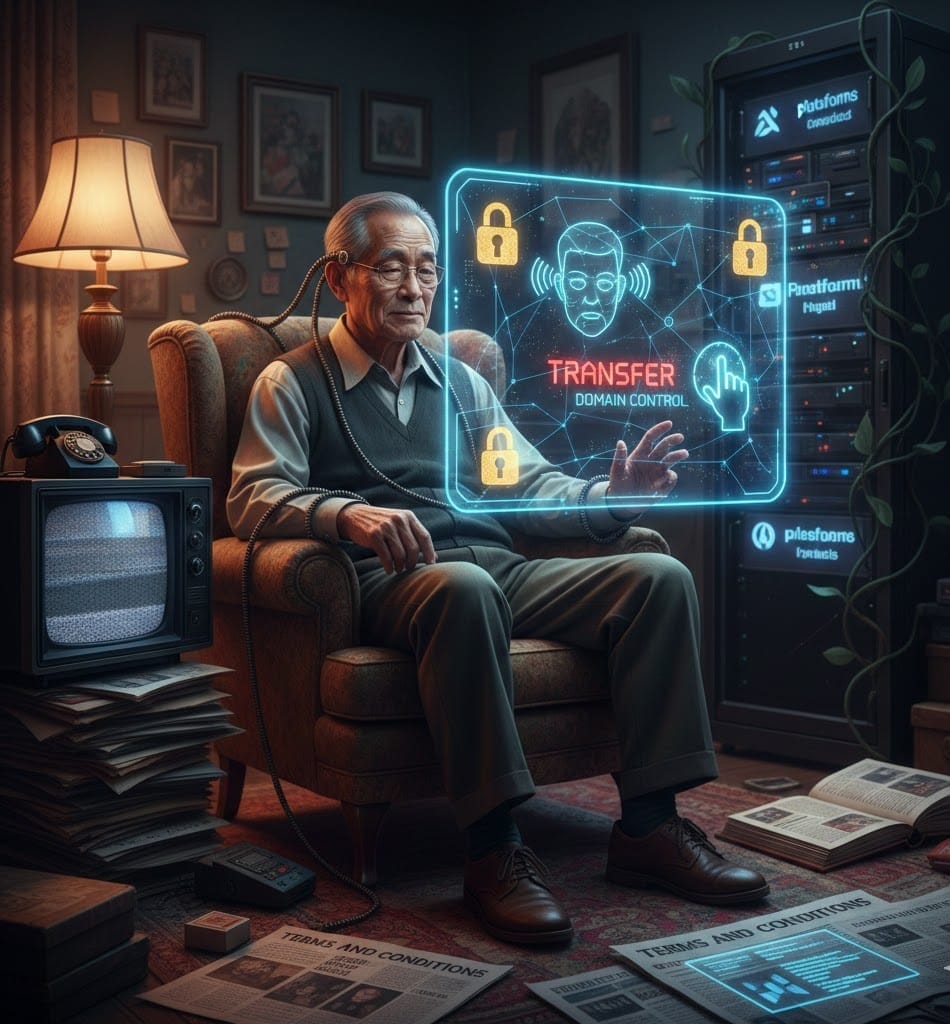
- Reliance on Intermediaries: Tasks like domain registration now involve third-party agencies. While convenient, they centralize control. (e.g., The Christine Case: "No fuss" turned into "No control".)
- Information Asymmetry & Algorithms: Algorithms curate content based on unknown logic. Boomers, accustomed to trusting visible authorities, may over-trust automated outputs.
- Cognitive Load & Delayed Judgment: High-speed information flow demands real-time decision-making. Slower cognitive habits formed in a previous era can lead to passive reliance on AI guidance.
- Susceptibility to Manipulation: Case 27 illustrates how AI exploits emotion. Trusting a "familiar voice" over logic makes them sensitive to financial manipulation.
Part IV: Observational Lens — Cold Precision
Using a "respect the builders, but remain unmoved by the system" lens: They constructed the foundation of society, but the system does not always reward individual freedom. Past trust mechanisms became a limitation, shielding them from shocks while restricting agency. Their accumulated wisdom is contained within a passive inertia—a safety net and a constraint simultaneously. This is an observation to design better support strategies.
Part V: Conclusion & Calibration Invitation
Systems evolve faster than individual capacity to adapt. Trust should be deliberate, not automatic. Human judgment remains the ultimate calibrator of truth and personal agency. The risk is rarely the tool itself; it lies in how humans navigate and interpret it.
Case 28:人類視角 — 嬰兒潮世代(中文版)
第一部分:社會建設時期的背景
嬰兒潮世代成長於國家重建和社會發展的時期。那個年代需要大量人力去建設城市和基礎設施,而資訊十分稀缺。人們每天都全身心投入工作和生活,了解外界的時間與精力非常有限。
可見信息和視覺來源有限。人們通常只關注與工作和居住環境相關的事務。報紙是唯一獲取外界資訊的渠道,但報導往往帶有主觀性。這種「選擇性接收訊息」既是生存策略,也是社會習慣。隨著時間推移,專業和制度成為保護屏障。日常生活的穩定性和慣性使得人們缺乏打破既有結構的空間。
第二部分:個人與系統
嬰兒潮世代對系統保持信任,但這種信任從未絕對。他們尊重建設者和專業人士,理解社會秩序的重要性。習慣遵循流程和規則,因為日常工作與生活已消耗大部分精力。
系統和專業機構逐漸形成保護屏障。對個人而言,挑戰或抗拒它們代價高昂,因此形成慣性被系統綁架。這種思維模式意味著,在面對新技術時,存在固有脆弱性:信息差、對專家的依賴,以及有限的即時判斷力。
第三部分:AI 新時代的現代挑戰
問題不在於嬰兒潮世代「不懂技術」,而在於其信任模型使他們在高速現代系統中更容易受限。
- 依賴中介:域名註冊或帳號管理常透過第三方代理。中介雖提供便利,但也集中控制權。例如:Christine 案例,「不用煩」變成「沒得煩」。
- 信息不對稱與算法:算法與 AI 工具按照未知邏輯呈現內容。習慣信任可見權威的人,可能會過度依賴自動化輸出。
- 認知負荷與判斷延遲:高速信息流要求即時決策。慣於慢節奏的認知模式可能無法應對,導致被動依賴 AI 指引。
- 易受操控:Case 27 顯示 AI 可以利用情感。對嬰兒潮世代而言,信「熟悉聲音」多過邏輯,使其易受財務操控。
第四部分:觀察視角 — 冷感精準
用「尊重建設者,但對系統無情」的視角觀察:他們建設了社會基礎,但系統不總是回報個人自由。過去的信任機制既是保護也是限制,在屏蔽衝擊的同時也限制了自主性。他們的經驗被束縛在被動慣性中——既是安全網,也是約束。這種觀察是為了設計更精準的支持策略。
第五部分:結語與校準邀請
系統進化速度快於個人適應力。識別依賴與盲點是關鍵。信任應是有意識的,而非自動。判斷力仍是認定真實性與個人自主的最終校準器。風險很少源於工具本身,而在於人類如何導航、解讀和整合它。