Case 07: The Resilience of Civilization: When the Roots of Home Meet the Soil of a New Continent
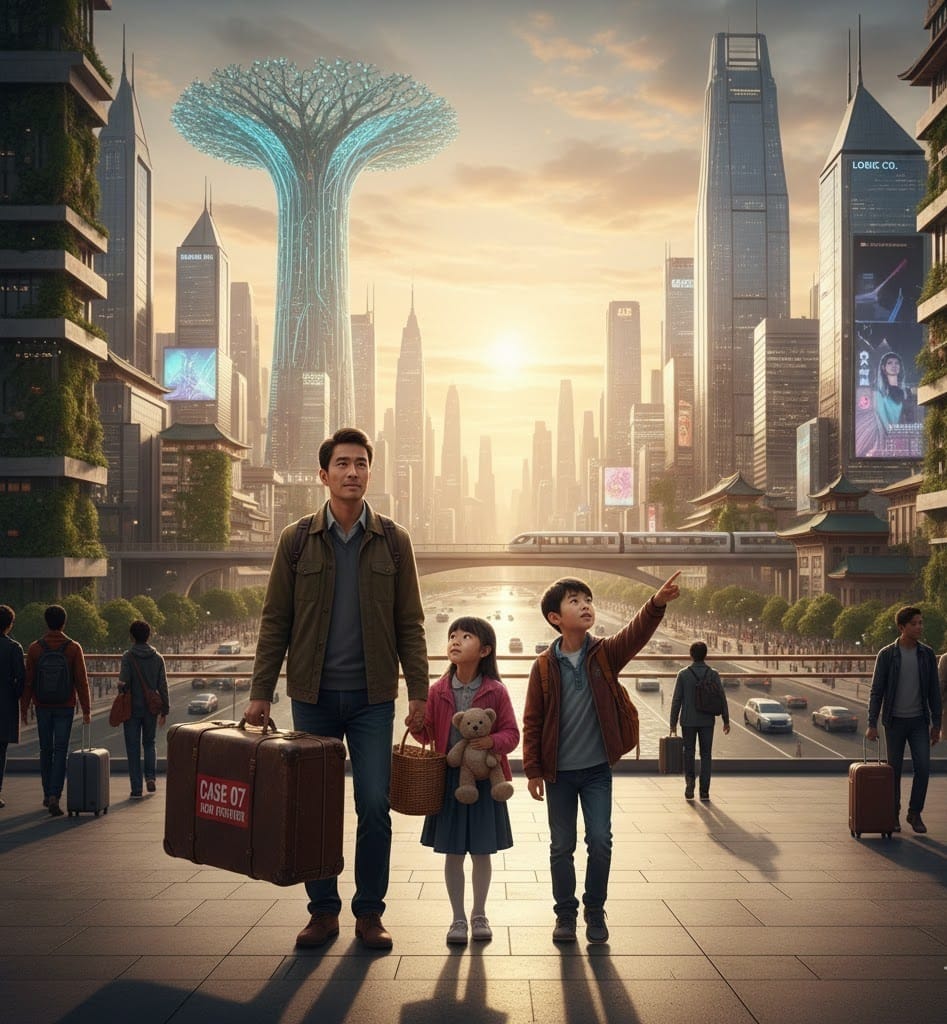
Migration, in the story of humanity, has never been a simple relocation.
It is not only the movement of bodies across borders, but the movement of meaning—of memory, identity, and the invisible architecture that once made life feel stable. A homeland is not merely a place on a map. It is a sensory system: the sound of language in the background, the smell of familiar streets, the rituals that quietly tell you who you are.
Australia—young in nationhood, vast in geography, shaped by ocean routes—has become one of the world’s most powerful migration laboratories. Here, countless cultural root systems arrive, carrying centuries of history, and attempt to settle into a soil that is comparatively new.
And so a quiet, multi-generational experiment unfolds:
When the roots of home cannot return, what kind of future can they grow into?
This is not a fairy tale of instant harmony.
Civilizations do not blend like paint.
They negotiate, resist, soften, and reshape—over time.
1) The First Generation: Searching for Echoes
For the first generation, the first landing is rarely freedom. It is often weightlessness.
The world that once felt automatic becomes foreign: street signs, social rules, even silence itself. The “background sound” of life—language, humour, shared cultural assumptions—disappears. You suddenly realize that home was not comfort. It was an operating system.
When that system is removed, the mind begins to rebuild. Instinctively.
It starts with anchors.
Places of worship. Ethnic communities. Grocery stores selling flavours from home. Restaurants that taste like childhood. These are not shallow nostalgia or “exotic culture.” They are psychological infrastructure—emotional oxygen stations.
And in many immigrant homes, the kitchen becomes the strongest fortress.
Recreating a grandmother’s dish is not just about taste. It is a daily ritual against erasure. It is a way of saying:
The world has changed,
but I have not disappeared.
What the mainstream often labels as “foreignness” is, for immigrants, a survival language.
2) The Second Generation: The Burden of Translation
If the first generation carries culture like luggage, the second generation carries it like a bridge.
They are born bilingual—not only in language, but in code.
At home: inherited values, taboos, emotional expectations.
Outside: the mainstream world’s logic, pace, and reward system.
They become translators of more than words. They translate manners. They translate humour. They translate identity. They often translate pain.
And this is where the real drama of integration begins—because translation is never neutral. Something always shifts.
The second generation learns how to survive in two worlds, yet may feel fully accepted in neither. Outside, they are not entirely “one of us.” At home, they are no longer entirely “one of us” either.
They carry the quiet exhaustion of cultural switching.
Yet they also build something new: a hybrid everyday life that is not a compromise, but a reality.
3) The Third Generation: From Inheritance to Choice
By the third generation, culture often becomes lighter.
The ancestral homeland turns abstract—more symbol than daily practice. Traditions shrink into festivals. The language becomes fragments. Customs become photographs.
And yet, something unexpected sometimes happens.
Because culture is no longer required for survival, it can be reclaimed as choice.
Some third-generation descendants begin to seek what was lost: relearning language, revisiting rituals, reconstructing identity not as necessity, but as belonging.
Here, heritage becomes something different:
Not a burden.
Not a rule.
But an emotional return—made by intention.
4) The Silent Trade: Cultural Softening as Strategy
Integration has a cost.
It is rarely spoken aloud, but it is widely practiced: cultural softening.
Accents become quieter. Edges become smoother. Traditions retreat from daily life into annual rituals. Some customs fade—not because they are meaningless, but because they are expensive in social friction.
This is not betrayal.
It is strategy.
Many second and third-generation immigrants shift the energy their parents used to protect difference into the labour of building connection. They stop constructing fortresses and begin constructing bridges.
This softening becomes a letter of trust to society—
and a ticket purchased for the next generation’s fairer entry.
In time, the roots of home become less visible.
They stop being a plant in the yard.
They become an ink painting in the heart—present, but not displayed.
This is the silent trade.
Conclusion: A Clearer View of Multicultural Reality
Here is the uncomfortable truth of civilization:
There is no integration without loss.
Cultural softening is not failure. It is a form of optimization—a generational system adjustment that trades some visible diversity for stability, mobility, and social capital.
The first generation sets the initial values.
The second translates and adapts.
The third faces the real question:
Will the optimization erase the original code completely—
or will parts of it be rewritten, preserved, and carried forward within a shared platform?
Australia’s multicultural experiment suggests a deeper lesson:
A sustainable diverse society does not require naive celebration of diversity.
It requires a sober understanding of integration loss—
and the deliberate design of social “buffers” that reduce the damage.
Perhaps the future begins with this clarity—
not as an answer, but as a more honest starting point.