Architectural Protocol: Decision Convergence in Low SNR Environments
Data Bias
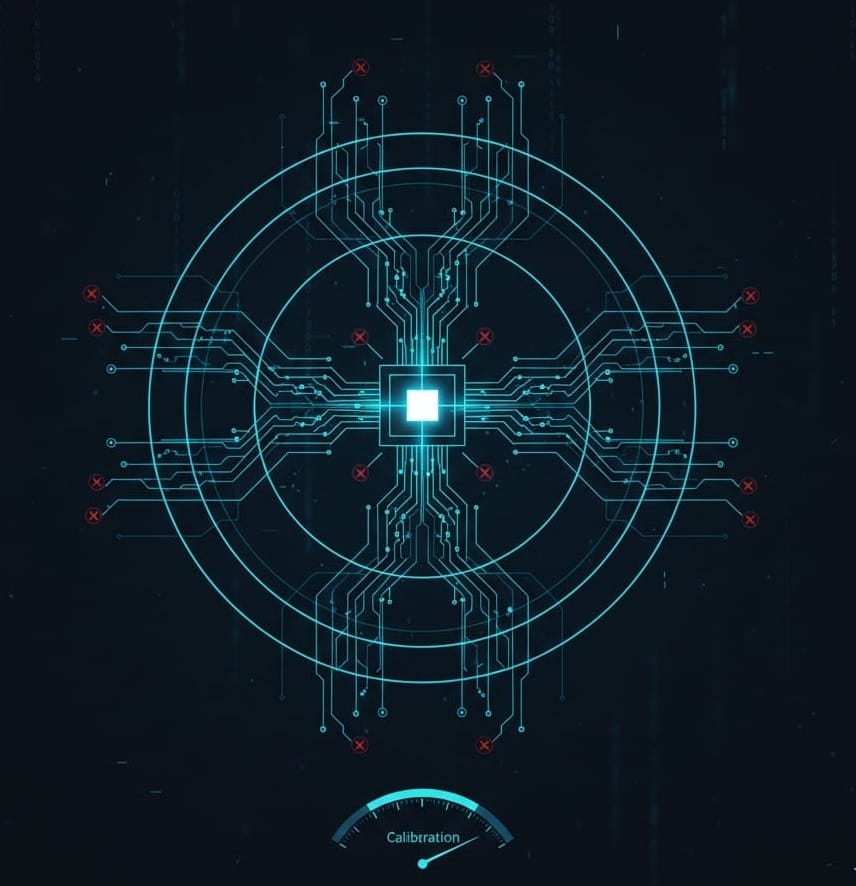
Filter culture is essentially Data Bias. When a system repeatedly receives patched inputs, its internal model mistakenly treats the "corrected" state as the baseline. Reality becomes an anomaly to be fixed.
NULL / Objective Function: NULL
Decision paralysis stems from missing priority protocols. When aesthetics, social proof, and fleeting emotions offset each other at equal weights, the system enters an Infinite Loop.
(Reality Calibration):
1. Active Denoising: Force-filter low-relevance data at the input layer.
2. Decoupling: Separate visual aesthetics (outer layer) from core values (inner layer).
3. Reality Calibration: Force a "raw data" check before final commitment.
《架構協議:低信噪比環境下的決策收斂》
技術定義:數據偏置
濾鏡文化本質上是一種數據偏置。當系統反覆接收修補過的輸入,內部模型會誤將「修正後」的狀態視為基準。真實反而成了需要被修正的異常。
系統故障:目標函數
決策癱瘓源於優先級協議缺失。當視覺美感、他人評價與即時情緒在同一權重互相抵消,系統會陷入無限循環。
解決協議
- 主動降噪 (Active Denoising) :在輸入層強制過濾低相關性數據。
- 邏輯解耦 (Decoupling):將視覺美感(外層)與核心價值(底層)分離。
- 真實性校準 (Reality Calibration) :在決策前強制引入一組「無濾鏡原始數據」。